
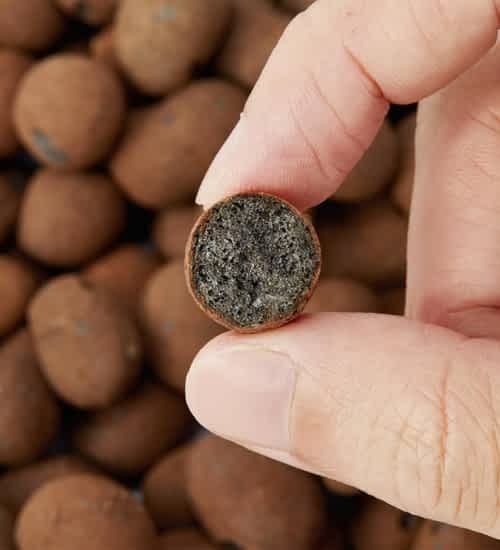
What Is LECA? (Lightweight Expanded Clay Aggregate)
LECA stands for Lightweight Expanded Clay Aggregate – also commonly called expanded clay pebbles or clay balls. It is made by heating natural clay to temperatures between 1,100°C and 1,300°C inside a rotary kiln. At that heat, the clay expands, forming round, porous pellets with a tough vitrified ceramic outer shell and a complex, interconnected honeycomb interior.
The result is a material that is lightweight, chemically neutral, and physically stable. It does not rot, compress, or break down over time. This combination of properties makes LECA one of the most versatile growing and building materials available today.
bulk LECA supplier – Where Consistency Matters
For individual home growers, a small bag from a local store is enough. For commercial growers, construction contractors, or distribution businesses, sourcing LECA at scale is a completely different challenge.
Factories vary. Bag weights fluctuate. Particle sizes are inconsistently graded. Containers are often loaded poorly, wasting shipping space and raising your cost per cubic metre. Quality checks are rarely independent.
SUBSTRAVA was built specifically to solve this problem for B2B buyers.
We maintain direct relationships with a vetted global network of expanded clay aggregate manufacturers. Every order we handle goes through independent pre-shipment quality verification, strict size grading checks, and optimised container loading – before a single bag leaves the factory floor.
Why businesses choose SUBSTRAVA for bulk LECA supplier
LECA Sizes We Supply
We source expanded clay aggregate in five standard size grades to match specific commercial applications. Because we work with multiple manufacturing facilities, we are not limited to a single product line.
| LECA Size | LECA Grade | Primary Applications |
|---|---|---|
| 2–4 mm | Ultra-Fine | Seedling propagation, succulent substrates, fine-grade water filtration media, lightweight concrete admixtures |
| 4–8 mm | Fine / Standard | General potted plants, hydroponic systems, aquaponics, roof garden drainage, lightweight concrete blocks |
| 8–16 mm | Medium | General potted plants, hydroponic systems, aquaponics, roof garden drainage, lightweight concrete blocks |
| 11–14 mm | Medium-Large | Road and bridge drainage layers, sports field construction, noise barrier backfill, larger potted plants |
| 20–30 mm | Large | Landfill leachate treatment, foundation drainage, large-scale green infrastructure, acoustic insulation |
Note: Custom sizes are available on request. Contact our sourcing team with your particle size distribution specification.
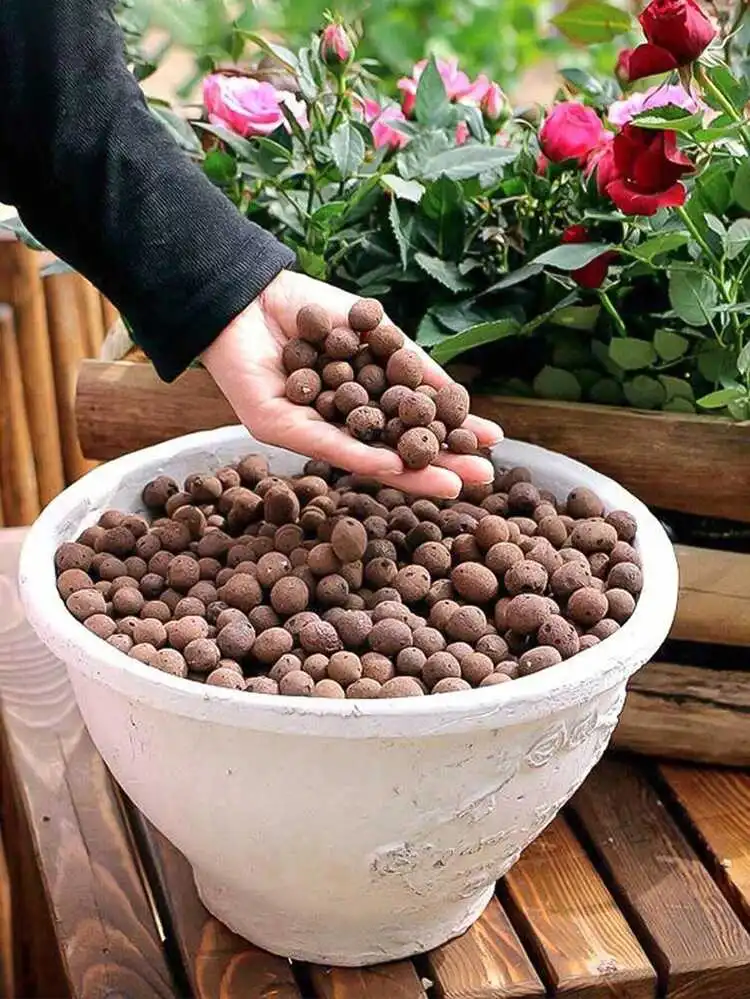

Technical Specifications
Every batch of LECA we source is held to the following verified baseline standards, tested in accordance with international quality norms. Values may vary within range depending on particle size grade.
Physical Properties
| Property | Specification | Test Standard |
|---|---|---|
| Bulk Density | 300 – 600 kg/m³ (size-dependent) | GB/T 17431.1 |
| Particle Density | 800 – 1,200 kg/m³ | GB/T 17431.1 |
| Water Absorption (24h) | 10 – 20% by volume | GB/T 17431.1 |
| Compressive Strength | ≥ 1.5 – 5.0 MPa (size-dependent) | GB/T 17431.1 |
| Thermal Conductivity | 0.08 – 0.15 W/(m·K) | Hot Disk Method |
| Freeze-Thaw Resistance | ≥ 50 cycles – no mass loss | GB/T 17431.1 |
| Firing Temperature | 1,100 – 1,300°C | – |
| Service Life | ≥ 50 years | – |
Typical Chemical Composition
| Compound | Content |
|---|---|
| SiO₂ (Silicon Dioxide) | 55 – 65% |
| Al₂O₃ (Aluminium Oxide) | 20 – 30% |
| Fe₂O₃ (Iron Oxide) | 3 – 8% |
| CaO (Calcium Oxide) | 1 – 3% |
| MgO (Magnesium Oxide) | 1 – 2% |
| Other trace elements | ≤ 5% |
Chemical Properties
| Property | Specification |
|---|---|
| pH Range | 6.5 – 7.5 |
| Heavy Metals | None detected – REACH & FDA compliant |
| Toxicity | Non-toxic, odorless, eco-friendly |
| Chemical Stability | Resistant to acids, alkalis, and biological degradation |
Quality Certifications
- GB/T 17431.1-2010 — National Standard for Lightweight Aggregates
- ASTM C330 — Standard Specification for Lightweight Aggregates for Structural Concrete (USA)
- EN 13055-1 — Lightweight Aggregates for Concrete and Mortar (EU)
LECA produced at these temperatures meets the sterility requirements for certified organic growing operations and food-safe hydroponic systems.
Industries We Serve
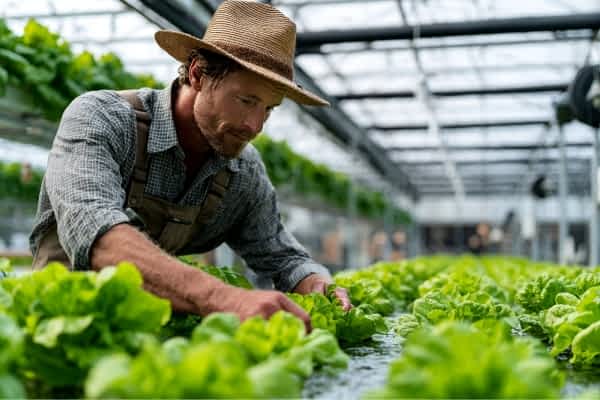
Commercial Hydroponics and Greenhouse Farming
LECA is one of the most widely used growing media in modern commercial hydroponics systems. Its porous structure allows oxygen to reach plant roots continuously, while its inert chemical profile means it does not interfere with nutrient solutions. Pre-washed and sterilized, it is ready for use in NFT channels, deep water culture systems, and Dutch bucket setups.
We supply consistent, dust-low batches specifically suited for automated irrigation systems, where even small particle inconsistencies can cause blockages.
Sustainable Construction and Green Roofs
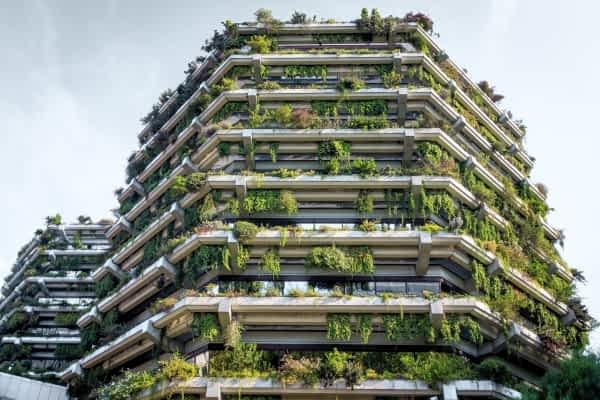
Modern building design increasingly demands materials that reduce structural load without compromising drainage or insulation performance. LECA’s bulk density of 300-600 kg/m³ – significantly lighter than conventional aggregates – reduces the load on roof structures and building frames. Its thermal conductivity of just 0.08–0.15 W/(m·K) also reduces heating and cooling energy demand in wall and floor assemblies.
It is used as a drainage layer beneath green roof membranes, as lightweight fill in floor slabs, and as thermal insulation in cavity walls. Its long-term physical stability means it will not compact or degrade within the structure over decades.
Industrial and Municipal Water Filtration
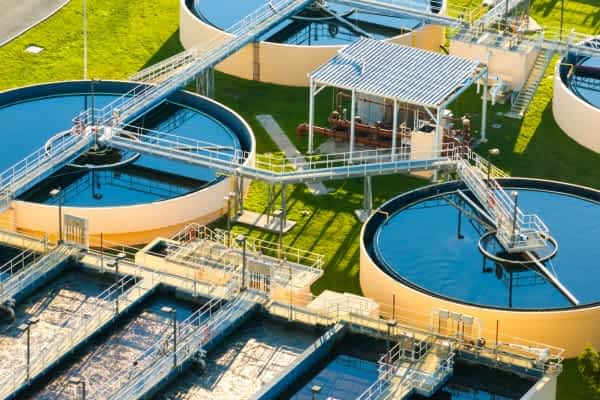
The combination of LECA’s hard outer shell and porous internal structure makes it an effective filtration medium. Water passes through the beds slowly, and the internal surface area supports the growth of beneficial bacteria for biological filtration. It is used in municipal wastewater treatment plants, industrial effluent systems, and constructed wetland filtration beds.
Bulk Packaging Options
We arrange packaging to match your operational requirements and downstream handling processes.
Standard Retail Bags Available in 10L, 40L, and 50L per bag – palletised and stretch-wrapped for direct warehouse intake, distribution centre delivery, or retail resale.
Custom Packaging Custom bag sizes, branding, and white-label options are available on volume orders.
Lead Times Standard production and dispatch lead time is 7–15 days from order confirmation, subject to order volume and port availability.
Shipping Options We coordinate full container load (FCL) and less-than-container-load (LCL) sea freight from major Chinese ports including Shanghai, Ningbo, and Guangzhou. Air freight is available for urgent orders. Land transport is available for neighbouring regions. Door-to-door delivery can be arranged.
frequently asked questions
Vermiculite has a pH range of 6.0-9.0 and a naturally mildly alkaline tendency. In most growing substrates at normal application rates, its effect on pH is minor. However, in sensitive systems such as recirculating hydroponics with tight pH targets, we recommend testing your specific blend before full deployment.
Yes, though it requires more careful sterilization than perlite between cycles because its higher moisture retention creates conditions where pathogens can persist if cleaning is incomplete. Standard practice is washing and sterilising with dilute hydrogen peroxide. Its physical structure does not degrade with repeated use.
Perlite drains freely and prioritizes aeration. Vermiculite retains moisture and nutrients. In most commercial hydroponic operations, the two are blended in ratios typically between 50:50 and 70:30 (perlite: vermiculite) depending on the crop’s water requirements. We supply both materials – contact us if you need a combined order.
We work with buyers requiring full container loads (FCL) – typically 20-foot or 40-foot High Cube containers. Contact us with your volume requirements and we will confirm availability and lead times.
Our pre-shipment inspection includes mechanical sieve analysis of each batch. Results are documented and shared with buyers before final approval. Batches outside the agreed tolerance are rejected.
Yes. The material is chemically inert, non-toxic, and contains no heavy metals – fully compliant with REACH and FDA standards. Fired at 1,100–1,300°C, it is completely sterile and free from pathogens, weed seeds, and biological contaminants. It is suitable for certified organic hydroponic systems.

