
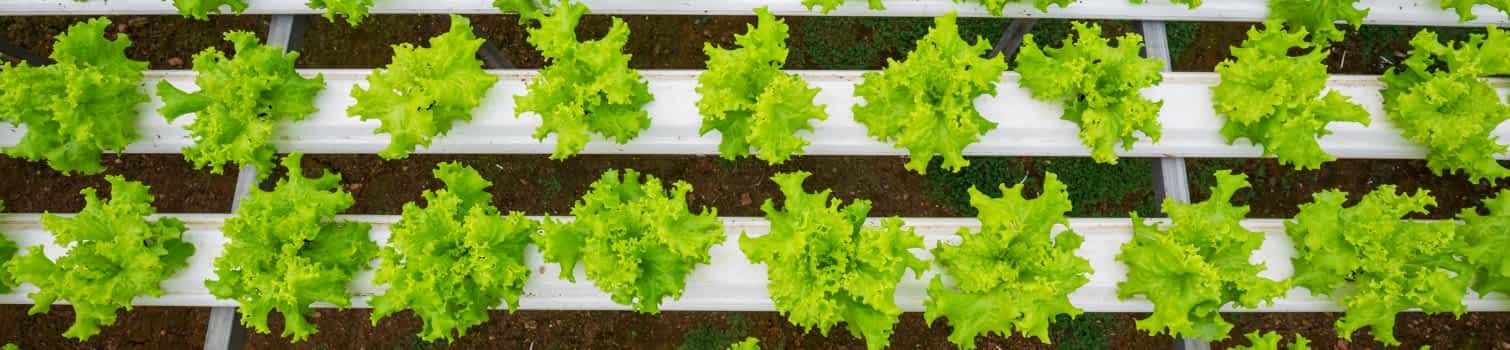
LECA and Perlite for Hydroponics and Aquaponics Systems
Growing without soil puts full responsibility on your substrate. There is no natural buffer, no organic matter to correct small mistakes. The medium you use either works precisely as your system requires – or it does not.
This is why commercial growers and system operators around the world are careful about where their substrate comes from and how consistently it performs from one batch to the next.
At SUBSTRAVA, we manufacture Expanded Clay Aggregate and Perlite to specifications that meet the demands of professional hydroponic and aquaponic operations. Whether you are running a large-scale nutrient film technique farm, a recirculating deep water culture system, or a closed-loop aquaponic facility, the substrate we supply is processed to perform reliably every time it arrives.
Why Commercial Growers Choose LECA
Expanded Clay Aggregate, more commonly known as LECA or clay pebbles, has become one of the most trusted growing media in professional hydroponics. The reason is straightforward – it does exactly what a hydroponic substrate needs to do, and it keeps doing it across multiple growing cycles.
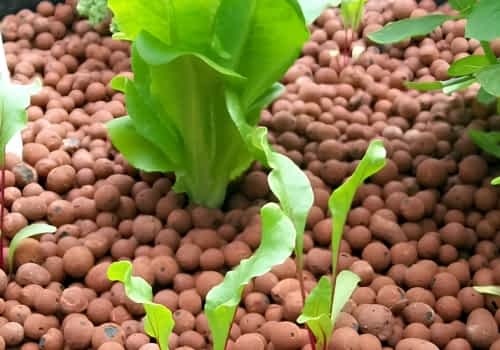
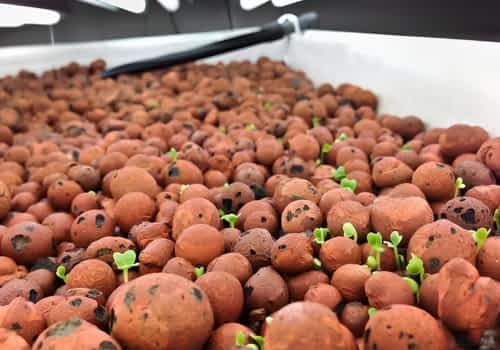
Our LECA is manufactured by firing natural clay at high temperatures in a rotary kiln. This process creates a round, lightweight pellet with a porous inner structure and a hard outer shell. The result is a substrate that drains freely, holds its shape under pressure, stays chemically neutral, and gives plant roots consistent access to oxygen.
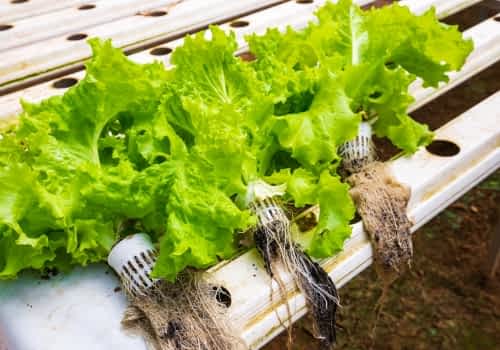
In a hydroponic system, where roots are in direct contact with water and nutrient solution, oxygen availability at the root zone is one of the most important factors in plant health. LECA’s internal air pockets and open structure allow roots to breathe even when the medium is fully saturated during a flood cycle.
In aquaponic systems, LECA performs an additional function. Its porous surface provides surface area for beneficial bacteria to colonise. These bacteria are essential to the nitrogen cycle in aquaponics – they convert fish waste into plant-available nutrients. A substrate with more surface area supports a stronger, more stable bacterial colony, which means a more balanced and productive system overall.
What makes our LECA suitable for Hydroponic
Our Expanded Clay Aggregate is pH neutral, which means it will not interfere with your nutrient solution or alter the water chemistry in your aquaponic system. It is chemically inert, meaning it does not break down or release substances into the growing environment over time. It can be cleaned and reused across multiple growing cycles, which reduces your ongoing input costs without any loss in performance.
We supply LECA in a range of aggregate sizes. Smaller sizes suit propagation and systems with finer root structures. Larger sizes are better suited to mature plant cultivation and systems that require faster drainage and higher flow rates. Our supply team can help you identify the right size for your specific setup.
Perlite as a Hydroponic Substrate and Growing Media Component
Perlite has been used in professional horticulture for decades, and its role in hydroponics is well established. When used as a standalone substrate or blended into a growing medium, it provides excellent drainage, prevents compaction, and keeps the root zone open and well-aerated.
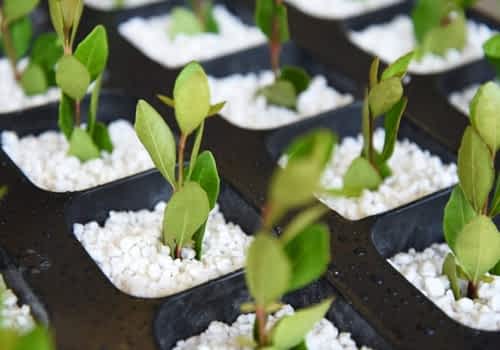
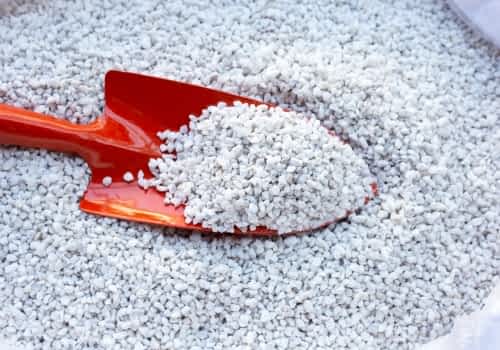
Our Perlite is produced from volcanic glass that is rapidly heated to around 850 degrees Celsius. At that temperature, the material expands to many times its original volume, forming a bright white, lightweight mineral with a highly porous surface. That porous surface is what makes it effective — it holds a small amount of moisture on its outer face while allowing excess water to drain away freely.
In hydroponic bag culture systems, which are widely used across commercial tomato, pepper, and cucumber production in Europe and the Middle East, perlite-filled grow bags are the standard growing medium. The substrate provides a clean, manageable, and high-performing environment that supports heavy cropping without the complications of soil-based production.
Perlite also blends well with other substrates. When combined with coco coir, it balances moisture retention with drainage. When combined with vermiculite, it creates a propagation medium that holds enough moisture for young roots while preventing waterlogging.
We supply horticultural-grade perlite in multiple sizes to suit different hydroponic system types, flow rates, and crop requirements.
Why SUBSTRAVA
Manufactured to specification, not just sourced
Every batch of LECA and Perlite we supply is processed to defined parameters – particle size, pH, structural integrity, and moisture content. You receive material that performs to the standard your system was designed for.
Export supply to commercial operations worldwide
We supply to hydroponic and aquaponic operations across Europe, the Middle East, Asia-Pacific, Africa, and the Americas. Our export process is managed end to end, including documentation, freight coordination, and compliance. You focus on growing. We handle the substrate supply.
Consistent batch quality
Commercial growing systems are built around predictable inputs. A substrate that varies between deliveries creates variables you do not want in a controlled production environment. Batch consistency is built into how we manufacture, not something we check at the end.
Available in the right grades for your system
Not all hydroponic systems need the same aggregate size or substrate specification. We work with your technical team to match the right product grade to your specific system design and crop type.
read product FAQ’s
Yes. We work with buyers on scheduled supply agreements to ensure consistent lead times and pricing stability. Speak to our team about setting up a recurring supply arrangement.
Yes. The material is chemically inert, non-toxic, and contains no heavy metals – fully compliant with REACH and FDA standards. Fired at 1,100–1,300°C, it is completely sterile and free from pathogens, weed seeds, and biological contaminants. It is suitable for certified organic hydroponic systems.
Our pre-shipment inspection includes mechanical sieve analysis of each batch. Results are documented and shared with buyers before final approval. Batches outside the agreed tolerance are rejected.
We work with buyers ordering full container loads (FCL) – 20-foot or 40-foot High Cube. For buyers with lower initial volume requirements, LCL (shared container) options may be available. Contact us with your volume and we will advise on the best arrangement.
The core material is the same – expanded volcanic glass. The distinction is in particle sizing and dust levels. Horticultural grades are sized for root aeration and typically have lower dust content to avoid blocking irrigation systems. Construction grades are sized for aggregate performance in concrete and insulation mixes. We supply both grades across our four size options.
No. Perlite has a neutral pH of 6.5–7.5 and an extremely low electrical conductivity. It does not contribute minerals or ions to your nutrient solution and will not affect system chemistry.

