
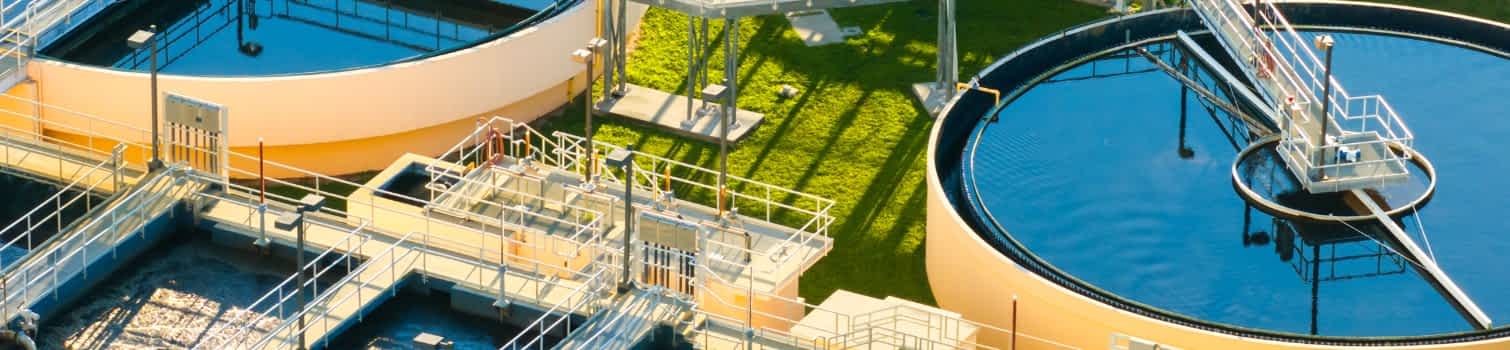
When purity matters, the filter media you choose matters too
Filtration sits quietly at the centre of some of the world’s most critical production processes. It removes what should not be there – fine particles, suspended solids, biological matter, and process residues – from liquids that need to be clean, clear, and safe before they reach the next stage of production or the end consumer.
The filter media doing that work has to be chemically inert. It cannot react with the liquid passing through it or contribute anything to the product stream. It has to be physically stable – maintaining its structure under pressure and flow without breaking down into the very product it is supposed to be cleaning. And it has to be consistent from one batch to the next, because a filtration process built around a defined media specification cannot accommodate material that varies.
Perlite and LECA meet these requirements by nature of what they are – naturally occurring, chemically inert minerals that are processed into stable, defined particle sizes suitable for filtration across a range of industrial applications.
SUBSTRAVA supplies industrial-grade Perlite and LECA to filtration operations and processing facilities that need a reliable, specification-consistent filter media supply partner.
Perlite as an industrial filter aid
Perlite has been used as a filter aid in industrial processing for decades. Its place in filtration comes from a combination of properties that are difficult to replicate with synthetic alternatives – it is chemically inert, it is available in precise particle size ranges, it creates a permeable filter cake that allows liquid to pass through while retaining fine suspended particles, and it is naturally free of organic matter.
When used as a filter aid, Perlite is typically applied in one of two ways – as a precoat layer on a filter element, or as a body feed added continuously to the liquid being filtered. In precoat filtration, a layer of Perlite is built up on the surface of the filter before the process liquid is introduced. This layer acts as the primary filtration surface, capturing particles and allowing clarified liquid to pass through. In body feed filtration, Perlite is added to the incoming liquid to prevent the filter cake from blinding and to maintain consistent flow rates throughout the filtration cycle.
Food and Beverage Processing
n the food and beverage industry, Perlite filter aid is used widely in the production of beer, wine, fruit juice, edible oils, vinegar, and sweeteners. Each of these products contains fine suspended particles that need to be removed before the product can be packaged or passed to the next production stage.
Beer filtration is one of the highest-volume applications. After fermentation, beer contains yeast cells, protein particles, and other fine suspended matter that affect clarity and shelf stability. Perlite filter aid removes these particles efficiently, producing a bright, clear product without affecting the flavour or chemistry of the beer.
Wine filtration follows a similar process, removing fine solids and yeast from wine after fermentation and before bottling. Fruit juice clarification uses Perlite to remove pulp and suspended fibre, producing a clear juice without centrifugation alone. Edible oil refining uses Perlite in the removal of fine solid impurities from crude and refined oils.
In all of these applications, the chemical inertness of Perlite is critical. The filter media is in direct contact with a consumable product. It must not react with the product, must not contribute flavour, colour, or chemical substances, and must meet food safety standards applicable to the processing facility.
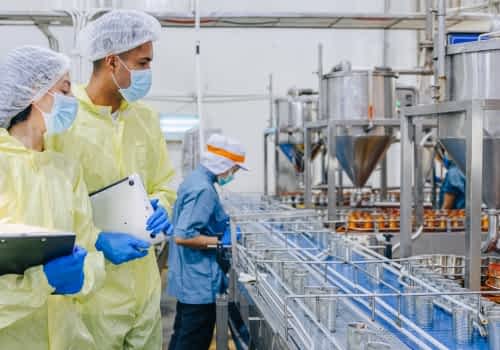
Pharmaceutical and Chemical Processing
In pharmaceutical manufacturing, the purity requirements for filter media are even more demanding than in food processing. Perlite is used in the filtration of pharmaceutical liquids, including active ingredient solutions, excipient streams, and process liquids where fine particle removal is required before the next manufacturing step.
Its chemically inert nature means it does not interfere with active pharmaceutical ingredients or excipients passing through the filter. Its consistent particle size distribution means filtration performance is predictable and reproducible – an important requirement in pharmaceutical manufacturing where process validation is a regulatory requirement.
In chemical processing, Perlite filter aid is used in the clarification and purification of a range of process liquids including industrial chemicals, acids, and process streams where fine particle removal is needed.
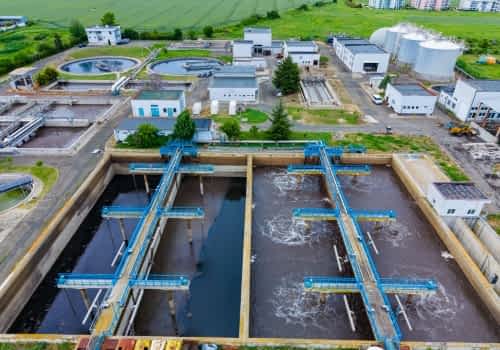
Swimming Pool and Water Filtration
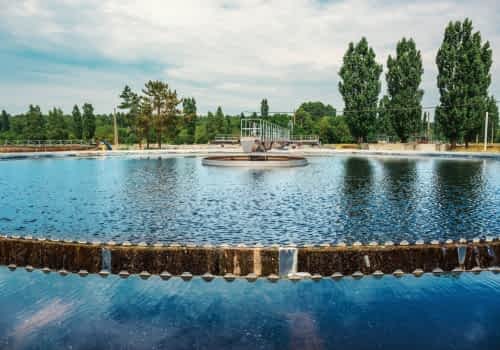
Perlite is used as an alternative to diatomaceous earth in swimming pool filtration systems. It provides comparable filtration performance in terms of particle removal efficiency while offering a cleaner handling experience in pool maintenance operations. In municipal and industrial water treatment, Perlite filter media is used in systems designed to remove fine suspended solids from process or drinking water streams.
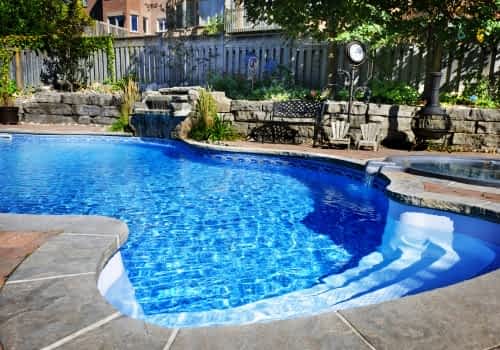
Leca in industrial filtration and water treatment
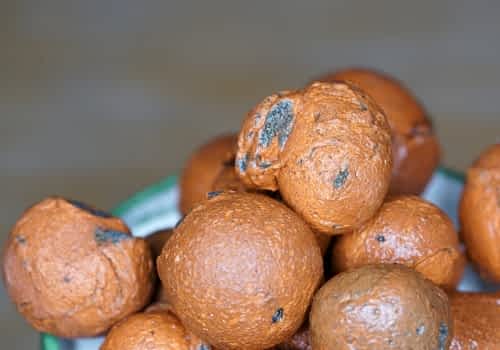
While Perlite handles fine particle filtration, Expanded Clay Aggregate fills a different and equally important role in industrial filtration coarse-stage filtration, biological filtration, and large-volume water treatment where a durable, structurally stable media is required.
LECA’s open porous structure, chemical inertness, and long operational life make it a practical and cost-effective filter media for applications where the filtration target is larger suspended particles, biological matter, or where the filter media needs to support microbial activity as part of the treatment process.
Water Treatment and Wastewater Filtration
In water treatment, LECA is used as a coarse filter media in multi-stage filtration systems where the first stage removes larger suspended solids before finer filtration stages handle smaller particles. Its consistent particle size and structural stability mean it holds its position in the filter bed under varying flow rates without compacting or migrating.
In wastewater treatment, LECA performs an additional function beyond mechanical filtration. Its porous surface provides an extensive surface area for biofilm development – colonies of beneficial microorganisms that break down organic matter in the wastewater as it passes through the filter bed. This process, known as biological filtration, is used in municipal wastewater treatment, industrial effluent treatment, and constructed wetland systems.
The same properties that make LECA effective as a biofilter media in aquaponic systems – surface area for bacterial colonisation, structural stability, and free drainage – make it effective in these larger-scale water treatment applications.
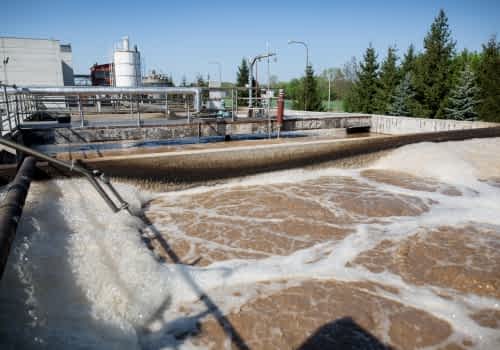
Industrial Effluent Treatment
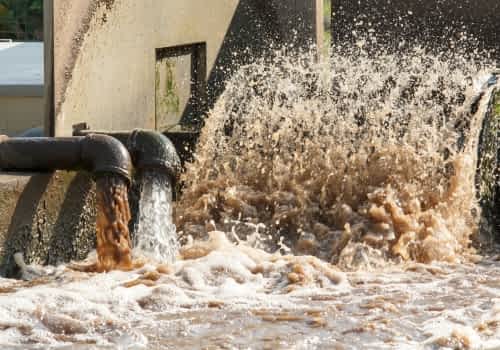
Manufacturing and processing facilities generate effluent streams that need treatment before discharge. LECA is used in effluent treatment systems for food processing plants, breweries, chemical facilities, and other industrial operations where the effluent contains suspended solids and biological oxygen demand that needs to be reduced before the water is released or recycled.
As a biofilter media in these systems, LECA supports the microbial communities responsible for breaking down organic contaminants. Its durability means the media bed operates for extended periods without replacement, reducing maintenance intervention and ongoing operational costs.
Constructed Wetlands and Environmental Filtration
Constructed wetlands are engineered systems that use natural biological processes to treat water – a growing application in sustainable infrastructure design. LECA is used as the substrate in constructed wetland systems because it provides the structural base for plant root systems while simultaneously supporting the biological filtration processes in the water flowing through it.
In these systems, LECA works on two levels – mechanically filtering suspended particles and providing the surface area for the microbial activity that treats dissolved contaminants. Its long operational life in permanently wet conditions and its resistance to compaction make it suited to these installations, which are designed to operate for decades with minimal intervention.

Why SUBSTRAVA
Two complementary filter media from a single supplier
Perlite handles fine particle filtration in food, beverage, and pharmaceutical processing. LECA handles coarse mechanical and biological filtration in water and effluent treatment. Together they cover the full filtration spectrum, all from one supply relationship.
Consistent particle size distribution across production
Industrial filtration processes are calibrated around defined media specifications. We supply to consistent particle size parameters so your filtration performance stays predictable from one delivery to the next.
Long operational life reduces replacement and maintenance costs
Both Perlite and LECA are processed minerals with stable physical structures. In the right application, they provide extended operational life before replacement is required, which reduces ongoing input costs in continuous filtration operations.
Technical compliance documentation available
For regulated industries including food processing and pharmaceuticals, we can provide material safety data sheets, compliance documentation, and technical specifications relevant to your regulatory environment.
read product FAQ’s
Yes. The perlite we source is non-toxic, contains no heavy metals, and is chemically inert. It is suitable for food and beverage filtration applications and complies with the relevant safety standards for food-contact materials.
The 3–6mm and 4–8mm grades are most commonly used in commercial drain-to-waste and recirculating hydroponic systems. They provide adequate drainage and root oxygenation without compacting. For propagation and seedling stages, 1–3mm mixed with coco coir is the standard approach.
Yes. Perlite can be washed, sterilized (typically with a dilute hydrogen peroxide solution), and reused for multiple growing cycles. Its physical structure does not degrade with repeated use.
We work with buyers requiring full container loads (FCL) – typically 20-foot or 40-foot High Cube containers. Contact us with your volume requirements and we will confirm availability and lead times.
Our pre-shipment inspection includes mechanical sieve analysis of each batch. Results are documented and shared with buyers before final approval. Batches outside the agreed tolerance are rejected.
Yes. The material is chemically inert, non-toxic, and contains no heavy metals – fully compliant with REACH and FDA standards. Fired at 1,100–1,300°C, it is completely sterile and free from pathogens, weed seeds, and biological contaminants. It is suitable for certified organic hydroponic systems.

