
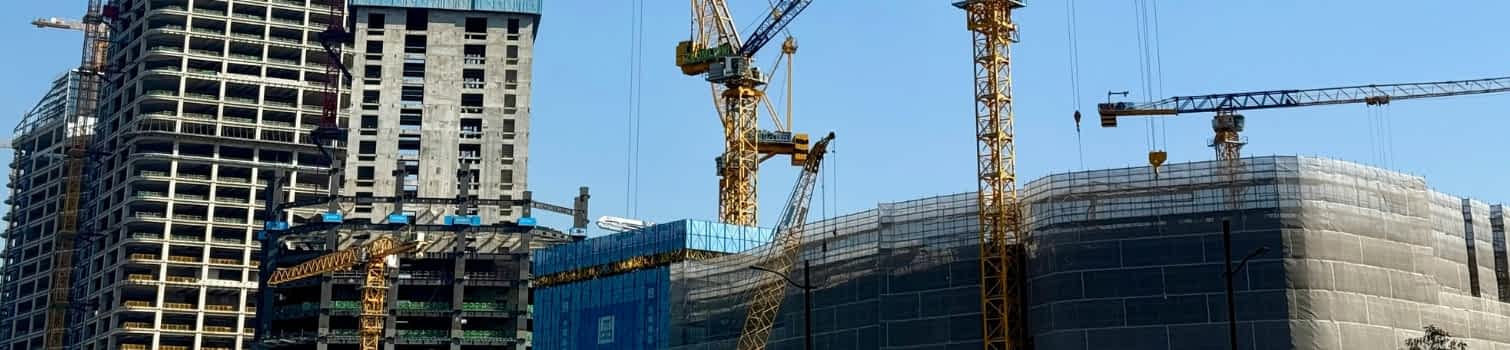
Lightweight Aggregate for Construction: LECA and Perlite for Green Building
The construction industry has always used minerals. What has changed in recent decades is why certain minerals are chosen and what they are being asked to do.
Lightweight aggregate reduces structural load without reducing strength. Insulating minerals reduce energy loss through walls and floors. Fire-resistant materials buy time when a building needs it most. In each of these roles, naturally processed minerals outperform many synthetic alternatives – because they are inherently stable, chemically inert, and their properties come from what they are rather than what has been added to them.
LECA and Perlite each bring something specific to construction applications. LECA provides lightweight structural aggregate. Perlite provides lightweight insulation and plaster aggregate. Together, they cover a range of construction needs that building product manufacturers and construction companies are increasingly specifying as green building standards rise and building codes tighten.
SUBSTRAVA supplies all three to construction industry clients who need consistent material quality and reliable supply at industrial volumes.
Leca in lightweight concrete and structural applications
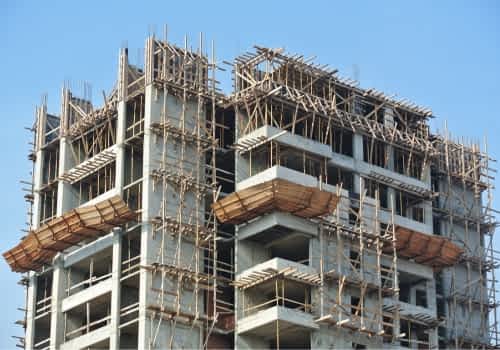
Conventional concrete is heavy. In multi-storey construction, the weight of floor slabs, walls, and foundations adds up quickly, placing significant demands on structural systems and increasing the overall material cost of a building.
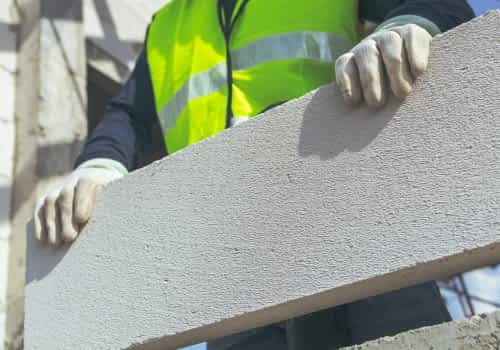
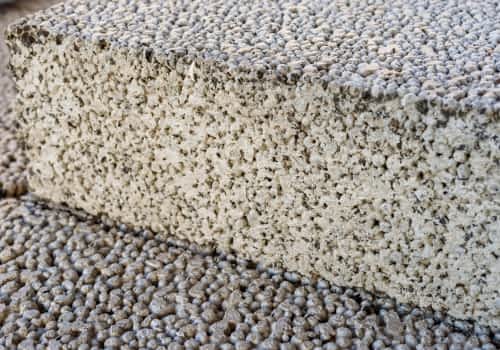
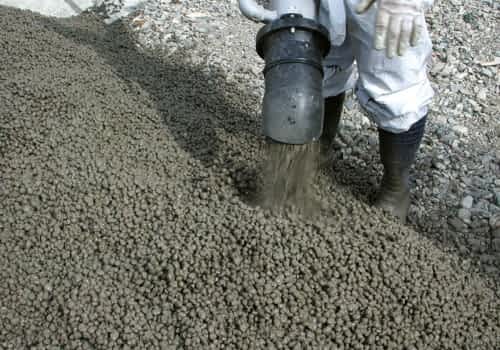
Lightweight concrete made with Expanded Clay Aggregate as the aggregate component reduces this weight substantially. Our LECA replaces conventional stone aggregate in concrete mixes, producing a finished concrete that is significantly lighter while retaining adequate compressive strength for a wide range of non-structural and semi-structural applications.
In practice, LECA concrete is used in floor screeds, roof deck slabs, partition walls, block manufacturing, and prefabricated building panels. It is also used in insulating concrete fills beneath floor finishes, where its low thermal conductivity adds an insulating layer that conventional concrete cannot provide.
LECA block construction – where the aggregate is used to produce lightweight masonry blocks – is well established in residential and commercial building across Europe and parts of the Middle East. These blocks are easier to handle, faster to lay, and provide better thermal insulation than dense concrete blocks, making them a practical choice for builders working under energy efficiency requirements.
Our LECA is supplied in aggregate sizes appropriate for different concrete applications, from fine grades suited to block manufacturing to coarser grades for structural lightweight concrete mixes.
Perlite in construction insulation and plaster
Perlite’s combination of low density, low thermal conductivity, and chemical stability makes it a useful material across several construction applications where weight and insulation performance both matter.
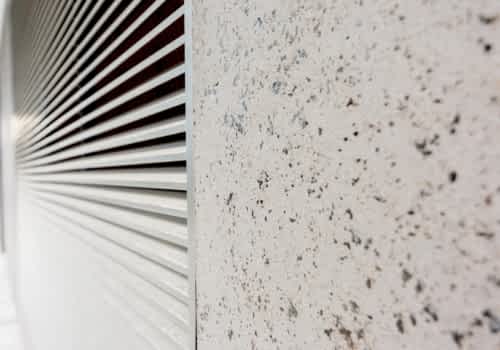
In lightweight plaster and render systems, Perlite aggregate replaces heavier conventional aggregates to produce a plaster that is easier to apply, reduces load on wall systems, and provides better thermal insulation than standard plaster. This is used in both new build and retrofit insulation work on external and internal walls.
In cavity fill insulation, loose Perlite is poured or blown into wall cavities to provide thermal insulation without the need for board or batt materials. It fills irregular spaces completely, is non-combustible, and does not settle or degrade over time in the way some organic insulation materials can.
Perlite is also used in the production of insulating concrete, roof deck insulation boards, and high-temperature insulation systems where its ability to withstand heat without burning or off-gassing is a significant advantage.
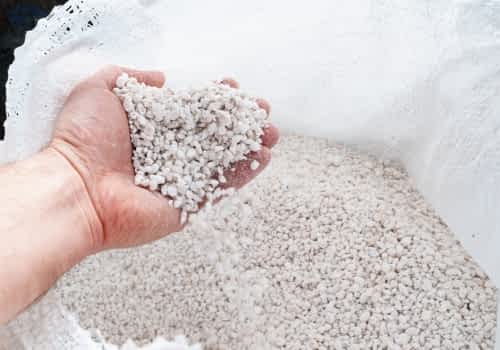
For construction product manufacturers producing lightweight plaster, insulation boards, ceiling tiles, and prefabricated building components, we supply horticultural and industrial-grade Perlite in the volumes and grades their production processes require.
Mineral insulation that does not degrade over time
Both Leca and Perlite contribute to thermal insulation in construction applications, and in some systems they are used together or in combination with other insulating materials.
Leca’s layered, plate-like structure traps air effectively, giving it good thermal insulation properties that remain stable over the life of a building. It does not absorb moisture in ways that reduce its insulating performance, and it does not provide a habitat for pests or mould in the way some organic insulation materials can.
Perlite’s low density and porous structure give it similarly stable insulating properties. In cryogenic insulation applications – used in liquefied natural gas storage, industrial cold storage, and similar industrial construction – Perlite is the standard insulation fill material because of its ability to maintain its insulating properties at extremely low temperatures.
For construction specifiers and product manufacturers, these properties mean both materials offer long-term insulation performance without the degradation and maintenance concerns associated with some alternative materials.
Why SUBSTRAVA
All minerals from a single supply source
Construction and building product applications often require more than one mineral substrate. Sourcing LECA, Perlite, and Vermiculite from a single supplier simplifies procurement and ensures consistency across your product lines or project specifications.
Industrial-grade supply at construction volumes
Construction and manufacturing applications require material at volumes and supply reliability that differ from horticultural procurement. We supply at the scale construction industry clients need, with the planning support that project timelines require.
Consistent particle size and specification
Building product formulations and construction system designs are built around defined material specifications. Variation in particle size or material properties creates production problems. Our materials are processed to consistent parameters every batch.
Chemically stable, non-combustible minerals
LECA, Perlite, and Vermiculite are all chemically inert and non-combustible. In construction applications where material stability and fire performance matter, this is a fundamental requirement that all three materials meet without additional treatment.
read product FAQ’s
Yes. The perlite we source is non-toxic, contains no heavy metals, and is chemically inert. It is suitable for food and beverage filtration applications and complies with the relevant safety standards for food-contact materials.
The 3–6mm and 4–8mm grades are most commonly used in commercial drain-to-waste and recirculating hydroponic systems. They provide adequate drainage and root oxygenation without compacting. For propagation and seedling stages, 1–3mm mixed with coco coir is the standard approach.
Yes. Perlite can be washed, sterilized (typically with a dilute hydrogen peroxide solution), and reused for multiple growing cycles. Its physical structure does not degrade with repeated use.
We work with buyers placing full container load (FCL) orders — 20-foot or 40-foot High Cube. For buyers with lower initial volume, LCL (shared container) options may be available. Contact us with your target volume and we will advise on the most practical arrangement.
The grades differ in particle size and therefore in bulk density, water holding capacity, and aeration performance. The 1-3mm grade is finer, denser, and holds more moisture per unit volume – ideal for seed germination and propagation. The 3-6mm grade is coarser, lighter, and provides more aeration – better suited to rooting media, hydroponics, and construction applications. The 2-4mm grade performs between the two and is the most versatile for general horticulture.
Yes. Vermiculite is a naturally occurring mineral, non-toxic, and chemically inert. It is free from heavy metals, synthetic additives, and biological contaminants. It is accepted in certified organic growing systems. Our supplied material is asbestos-free with independent laboratory certification.

