
perlite and vermiculite for propagation
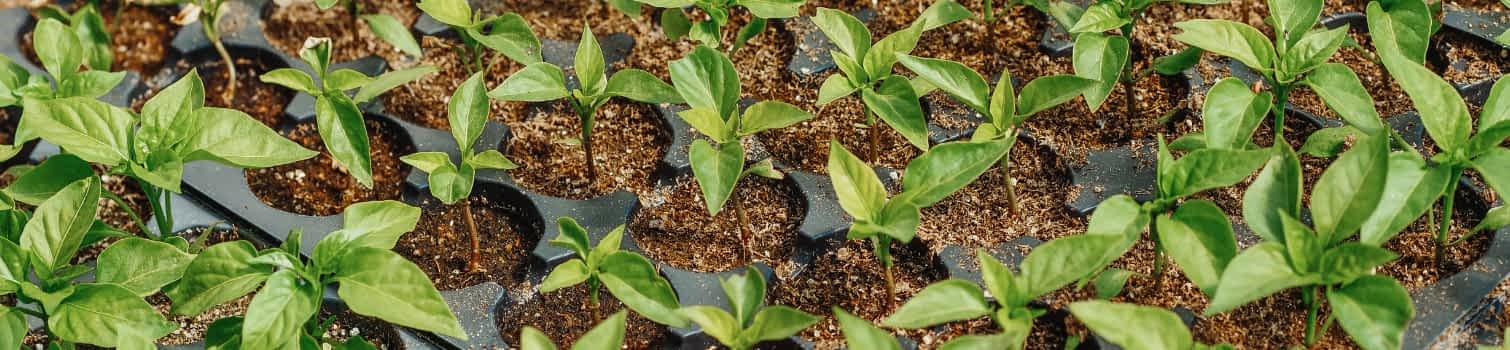
Every plant a nursery sends out begins as a seed or a cutting in a tray. Before it is anything else, it is a small, fragile thing that needs exactly the right amount of moisture, air, and stability to take hold.
This is where most of the risk in plant production sits. Get this stage wrong, and you lose time, materials, and labour before a plant has even produced its first true leaf. Get it right, consistently, and everything downstream becomes more predictable.
SUBSTRAVA supplies Perlite and Vermiculite specifically for this stage of production. Both are naturally occurring minerals, processed to be sterile, lightweight, and free of the inconsistencies that can affect germination rates and early root development. For commercial nurseries and propagation facilities working at scale, that consistency is not a nice to have – it is the difference between predictable output and constant troubleshooting.
Vermiculite For Germination And Propagation
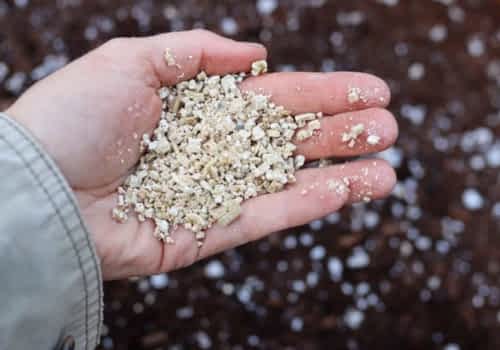
Vermiculite is one of the most widely used materials in commercial seed starting, and for good reason. Its structure is made up of thin, layered plates that open up when the mineral is heated during processing. This gives it a very high surface area, which allows it to hold moisture evenly and release it gradually.
For a germinating seed, this matters more than almost anything else. Seeds need consistent moisture to trigger and sustain germination, but they are also highly vulnerable to rot if conditions stay too wet for too long. Vermiculite’s structure manages this balance – it keeps the area around the seed moist without becoming saturated, and it does this evenly across an entire tray rather than in patches.
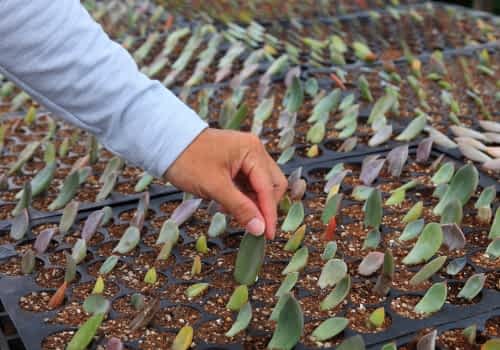
The same properties make Vermiculite effective for cutting propagation. Stem and leaf cuttings need to form new roots in an environment that supports them without causing rot at the cut surface. Vermiculite’s gentle moisture retention gives cuttings the stable environment they need during this vulnerable period.
Vermiculite is also sterile and free of weed seeds, pathogens, and pests by nature of how it is processed. For commercial propagation operations, starting with a clean medium reduces the risk of disease spreading through trays of young plants – something that can be costly to manage once it starts.
Perlite For Propagation Media And Seedling Mixes
While Vermiculite manages moisture, Perlite manages air. The two are often used together because they solve different problems within the same tray.
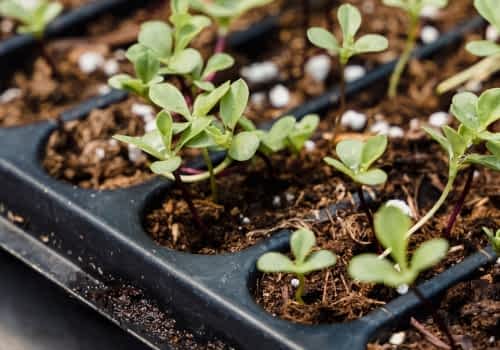
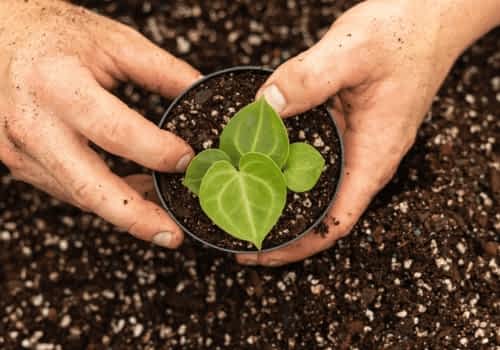
Our Horticultural Perlite is lightweight and highly porous, which means it creates small air pockets throughout a growing medium. For young seedlings, this prevents the medium from becoming compacted and waterlogged – two of the most common causes of damping off, a condition that can wipe out entire trays of seedlings within days.
In cutting propagation, Perlite is often used as the primary rooting medium on its own, particularly for plants prone to rot. Its fast drainage means cuttings are never sitting in standing water, while still retaining enough surface moisture to support root formation.
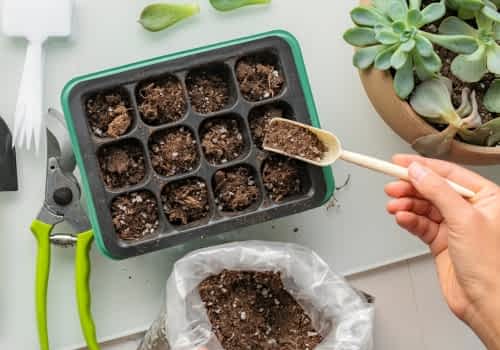
For nurseries blending their own propagation mixes, Perlite is a standard component alongside Vermiculite, coco coir, or peat. The ratio of Perlite to other materials can be adjusted depending on the crop, giving growers control over how much air versus moisture a particular mix provides.
Why SUBSTRAVA
Sterile, consistent material from batch to batch
Propagation operations cannot afford a substrate that performs differently from one delivery to the next. Our Perlite and Vermiculite are processed to the same specifications every time, so your germination rates and propagation success rates stay predictable.
Particle sizes suited to fine, sensitive work
Propagation work often requires finer grades than other applications. We supply Perlite and Vermiculite in particle sizes suited to seed trays, plug trays, and small-cell propagation systems.
One supplier for both core propagation materials
Most propagation mixes use both Perlite and Vermiculite. Sourcing both from a single supplier means consistent quality across your entire blend, and one less relationship to manage in your supply chain.
Export supply for growers and manufacturers worldwide
We supply nurseries and growing media manufacturers across Europe, the Middle East, Asia-Pacific, Africa, and the Americas, with full support for documentation, freight, and compliance.
read product FAQ’s
Yes. The perlite we source is non-toxic, contains no heavy metals, and is chemically inert. It is suitable for food and beverage filtration applications and complies with the relevant safety standards for food-contact materials.
The 3–6mm and 4–8mm grades are most commonly used in commercial drain-to-waste and recirculating hydroponic systems. They provide adequate drainage and root oxygenation without compacting. For propagation and seedling stages, 1–3mm mixed with coco coir is the standard approach.
Yes. Perlite can be washed, sterilized (typically with a dilute hydrogen peroxide solution), and reused for multiple growing cycles. Its physical structure does not degrade with repeated use.
We work with buyers placing full container load (FCL) orders — 20-foot or 40-foot High Cube. For buyers with lower initial volume, LCL (shared container) options may be available. Contact us with your target volume and we will advise on the most practical arrangement.
The grades differ in particle size and therefore in bulk density, water holding capacity, and aeration performance. The 1-3mm grade is finer, denser, and holds more moisture per unit volume – ideal for seed germination and propagation. The 3-6mm grade is coarser, lighter, and provides more aeration – better suited to rooting media, hydroponics, and construction applications. The 2-4mm grade performs between the two and is the most versatile for general horticulture.
Yes. Vermiculite is a naturally occurring mineral, non-toxic, and chemically inert. It is free from heavy metals, synthetic additives, and biological contaminants. It is accepted in certified organic growing systems. Our supplied material is asbestos-free with independent laboratory certification.

