
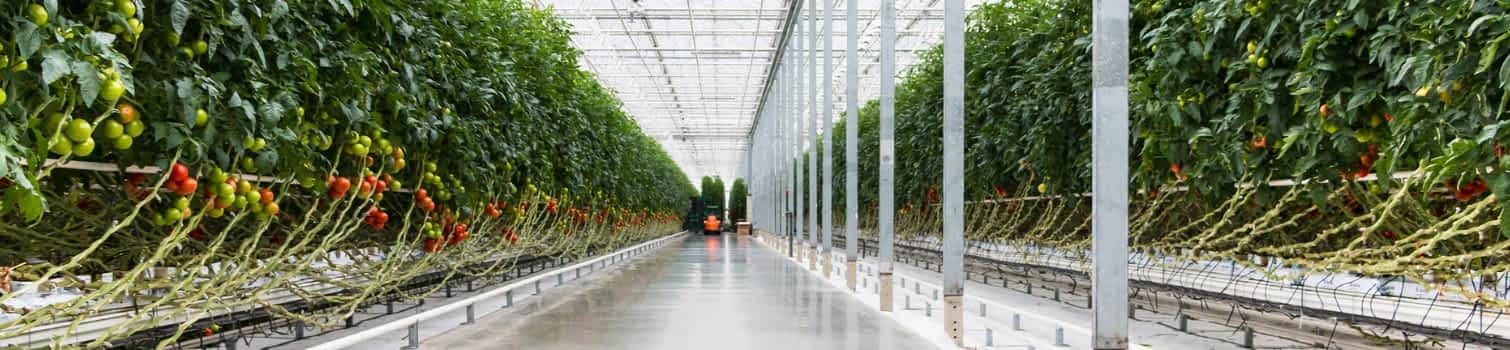
Mineral Substrates for Vertical Farming
Vertical farming and greenhouse production share one common challenge – space and resources are limited, and every input has to earn its place in the system.
In a vertical farm, weight matters. Every tray, every rack level, every substrate layer adds up across a facility with dozens or hundreds of growing levels. In a greenhouse, the substrate has to support intensive, long-duration cropping cycles with minimal room for error in drainage or root health.
SUBSTRAVA supplies mineral substrates that are built around these realities. Our LECA, Perlite, and Vermiculite are lightweight, structurally stable, and processed to specifications that suit high-density, high-output growing environments – whether that environment is a multi-level indoor farm or a large-scale commercial greenhouse.
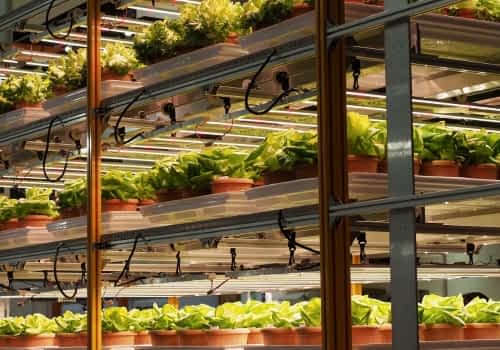
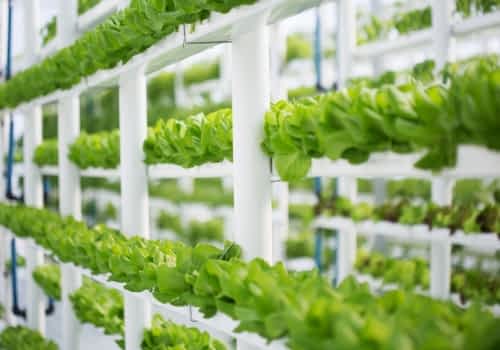
A Lightweight Expande Clay Aggregate (LECA) for Multi-Level Growing Systems
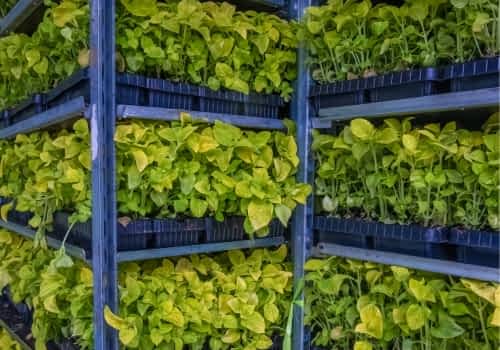
In vertical farms, where growing trays are stacked across multiple levels, the weight of the growing medium directly affects the load on racking, shelving, and building structure. LECA’s lightweight, air-filled structure makes it a practical choice for these systems without compromising on performance.
Our Expanded Clay Aggregate provides reliable drainage and aeration, even when used across many growing levels with automated irrigation cycles. It does not break down or compact over time, which means the substrate performing on level one behaves the same as the substrate performing on level twenty.
LECA is also reusable. After a growing cycle, it can be cleaned and returned to use, reducing the volume of new substrate a vertical farm needs to bring in on an ongoing basis. For operations running continuous crop cycles across large facilities, this has a real impact on input costs over time.
We supply LECA in a range of aggregate sizes. Smaller sizes suit propagation and systems with finer root structures. Larger sizes are better suited to mature plant cultivation and systems that require faster drainage and higher flow rates. Our supply team can help you identify the right size for your specific setup.
Perlite For Greenhouse Growing
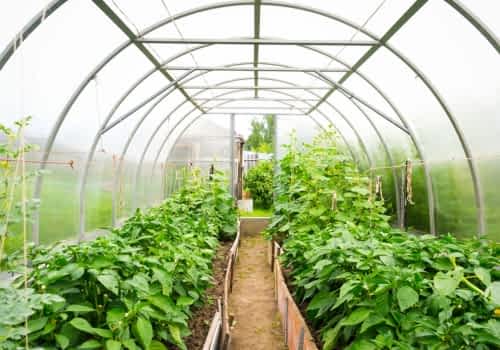
Commercial greenhouses growing tomatoes, peppers, cucumbers, and leafy greens need a substrate that holds up across long production cycles, often running for many months without replacement.
Our Horticultural Perlite is processed from volcanic glass expanded at high temperature, producing a lightweight, porous material with strong drainage characteristics. In greenhouse bag culture systems – one of the most widely used soilless production methods globally – perlite-filled bags provide a stable, well-aerated root zone that supports consistent yields across the full cropping cycle.
Perlite also plays a role in greenhouse propagation areas, where young plants are started before being moved to their final growing position. Its light, airy structure helps prevent damping off and supports strong early root development.
For greenhouse operators producing their own growing media blends, we supply perlite in grades suited to mixing with coco coir, peat, or other base materials.
Vermiculite For Propagation And Early Growth Stages
Both vertical farms and greenhouses rely heavily on a strong start – seedlings and young plants that establish quickly and transplant well set the tone for the entire production cycle.
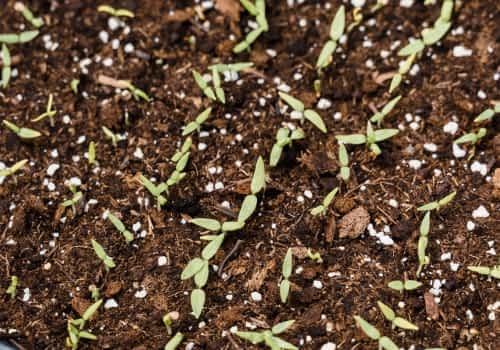
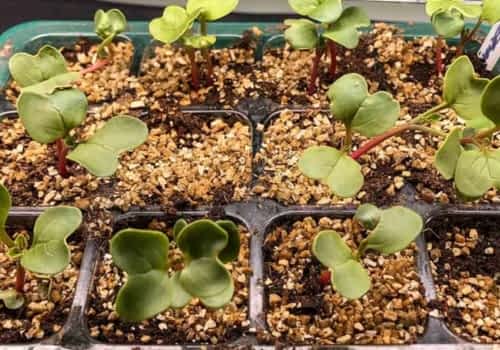
Our Exfoliated Vermiculite is widely used at this stage. Its structure holds moisture evenly around seeds and young roots, while its light weight prevents growing trays from becoming heavy or compacted. This is particularly useful in vertical farms, where propagation areas are often the most space-constrained part of the facility and every tray needs to be easy to handle.
When blended with Perlite, Vermiculite helps create a balanced propagation medium – enough moisture retention to support germination, with enough drainage to avoid problems with damping off or root rot.
Why Mineral Substrates for Vertical Farming
Lightweight materials, manufactured for scale
Our LECA, Perlite, and Vermiculite are processed specifically for the weight and volume considerations that matter in vertical farming and large-scale greenhouse operations.
One supplier across multiple substrate types
Many growing operations use more than one substrate across different stages of production. We supply LECA, Perlite, and Vermiculite from a single source, simplifying procurement and ensuring consistency across your entire growing system.
Specification-grade consistency
Every batch is processed to defined parameters for particle size, structural integrity, and moisture content. For operations running continuous production cycles, this consistency matters more than almost anything else.
Global export capability
We supply growing operations across Europe, the Middle East, Asia-Pacific, Africa, and the Americas, managing the export process from documentation to freight coordination.
FAQ’s FOR Mineral Substrates for Vertical Farming
Yes. We work with buyers on scheduled supply agreements to ensure consistent lead times and pricing stability. Speak to our team about setting up a recurring supply arrangement.
Yes. The material is chemically inert, non-toxic, and contains no heavy metals – fully compliant with REACH and FDA standards. Fired at 1,100–1,300°C, it is completely sterile and free from pathogens, weed seeds, and biological contaminants. It is suitable for certified organic hydroponic systems.
Our pre-shipment inspection includes mechanical sieve analysis of each batch. Results are documented and shared with buyers before final approval. Batches outside the agreed tolerance are rejected.
We work with buyers ordering full container loads (FCL) – 20-foot or 40-foot High Cube. For buyers with lower initial volume requirements, LCL (shared container) options may be available. Contact us with your volume and we will advise on the best arrangement.
The core material is the same – expanded volcanic glass. The distinction is in particle sizing and dust levels. Horticultural grades are sized for root aeration and typically have lower dust content to avoid blocking irrigation systems. Construction grades are sized for aggregate performance in concrete and insulation mixes. We supply both grades across our four size options.
No. Perlite has a neutral pH of 6.5–7.5 and an extremely low electrical conductivity. It does not contribute minerals or ions to your nutrient solution and will not affect system chemistry.

