
What Is Exfoliated Vermiculite?
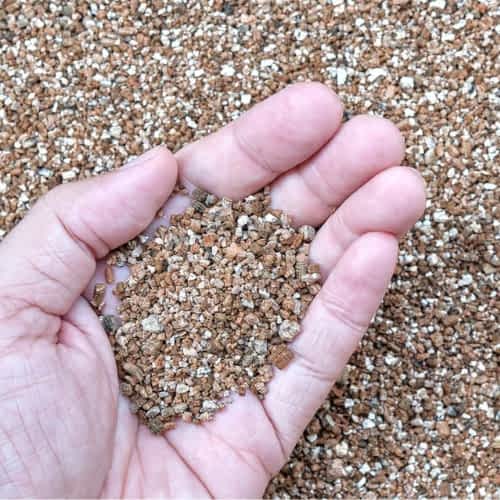
Vermiculite is a naturally occurring hydrated magnesium-aluminum-iron silicate mineral belonging to the phyllosilicate group. In its raw state, it appears as a dense, golden-brown flaky ore – similar in appearance to mica, which it is closely related to. Its transformation happens inside a high-temperature expansion furnace.
When raw vermiculite ore is heated rapidly to around 850-1,000°C, water molecules trapped between the mineral’s ultra-fine crystalline layers flash instantly into steam. The pressure of that steam forces the silicate sheets apart – a process called exfoliation – causing the material to expand up to 20-30 times its original volume. The result is a lightweight, accordion-shaped granule filled with millions of microscopic air pockets.
These air pockets are what define vermiculite’s commercial value. They give the material its remarkably low bulk density, high thermal resistance, outstanding moisture retention, and natural fire resistance – all in one chemically inert, sterile, non-toxic mineral. No manufacturing additives are involved. Every property vermiculite has is entirely natural.
Vermiculite vs. Perlite – Understanding the Difference
Both vermiculite and perlite are lightweight expanded minerals widely used in horticulture and construction, and they are often confused. The practical difference comes down to how each material handles water:
Perlite drains fast and holds almost no moisture. It is the better choice where drainage and airflow are the priority – for example, in drain-to-waste hydroponic systems or succulent substrates.
Vermiculite holds water and nutrients actively. It can absorb 220-325% of its own weight in water and releases it slowly back to plant roots as the surrounding medium dries. Its high Cation Exchange Capacity (CEC) also means it locks onto dissolved nutrients – magnesium, calcium, potassium, ammonium – and makes them available on demand rather than allowing them to leach through.
For most commercial growing operations, the two materials are blended – perlite for drainage and airflow, vermiculite for moisture and nutrient retention – to create a balanced growing substrate.
Sourcing Vermiculite at Scale – Why Consistency Matters
At bulk volume, the challenge with vermiculite supply is grade consistency. Particle size affects everything: bulk density, water holding capacity, and aeration performance all shift meaningfully between the 1-3mm, 2-4mm, and 3-6mm grades. A batch with a high proportion of undersized fines compacts differently, retains water unevenly, and can cause blockages in irrigation systems.
Quality also varies between production regions. Ore composition differs deposit to deposit, which affects expansion ratio, colour uniformity, and the CEC of the final exfoliated product. Buyers relying on a single factory without independent verification often absorb that variability without knowing it.
SUBSTRAVA handles this for B2B buyers. We work with a vetted multi-factory network, independently verify batch specifications before container loading, and coordinate complete shipping logistics – so you receive consistent, specification-matched material at your port.
Why Businesses Choose SUBSTRAVA for bulk vermiculite supplier
bulk vermiculite supplier Sizes
We source exfoliated vermiculite in three commercial particle size grades, each matched to specific applications. These correspond to internationally recognised grade designations from The Vermiculite Association (TVA) grading system.
| Size Grade | Grade Name | Primary Commercial Applications |
|---|---|---|
| 1-3 mm | A2 – Fine Grade | Seed germination, propagation trays, seedling and cutting media, fine soil amendment, insulating plaster filler |
| 2-4 mm | A2/A3 – Medium-Fine | General potted plants and container gardening, nursery growing mixes, soil conditioning, lightweight concrete admixtures, insulation boards |
| 3-6 mm | A3 – Medium Grade | Commercial horticulture and hydroponics, rooting media for cuttings, green roof substrates, lightweight roof and floor screeds, fire-resistant board manufacture, loose-fill wall cavity insulation |
Note: Particle size distribution (PSD) documentation is available for every grade on request.

Industries We Serve
Commercial Horticulture, Propagation, and Greenhouse Growing
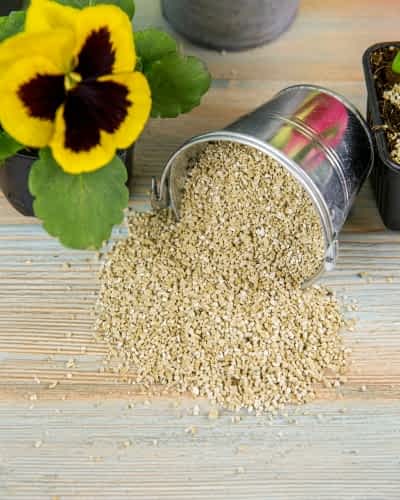
Vermiculite is one of the most trusted materials in commercial seed germination and plant propagation. Its combination of moisture retention, nutrient holding, and physical softness – Moh’s hardness of just 1 to 2 – means seedling roots can penetrate and develop without mechanical resistance.
Fine-grade 1-3mm vermiculite is the standard choice for propagation trays, seed starting mixes, and delicate seedling production. It absorbs moisture evenly across the tray and releases it back to germinating seeds gradually, maintaining consistent root-zone conditions without waterlogging. Because it is sterile and chemically inert, it introduces no pathogens, competing biology, or unwanted mineral salts into the growing environment.
Medium grades (2-4mm and 3-6mm) are used in rooting media for cuttings, mixed with coco coir or peat, and as a soil amendment in container gardens, raised beds, and greenhouse benches to increase moisture retention and nutrient availability.
Sustainable Construction – Insulation, Screeds, and Fireproofing
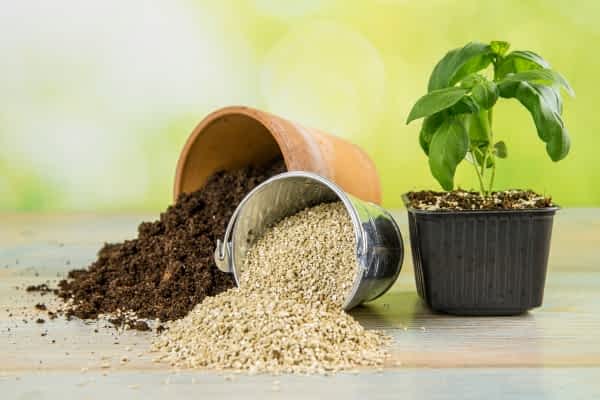
Vermiculite contributes to several critical performance requirements in modern construction – thermal insulation, fire resistance, and weight reduction – all at once.
As loose-fill cavity wall insulation, vermiculite’s thermal conductivity of 0.058-0.071 W/m·K delivers meaningful energy savings in both residential and commercial buildings. It flows freely into irregular cavity spaces that rigid insulation boards cannot reach and requires no adhesives or binders.
In lightweight concrete and screed mixes, vermiculite aggregate reduces the total weight of the slab significantly while maintaining workability. Vermiculite concrete typically weighs 20-25 lbs per cubic foot, compared to approximately 100 lbs per cubic foot for standard concrete – a reduction of up to 75%.
For fireproofing applications, vermiculite is used in fire-rated boards, protective coatings for structural steel, and fire-resistant plasters. Its fusion point of 1,200-1,320°C means it remains structurally stable in temperatures far beyond standard building fire conditions.

Industrial Applications – Packaging, Filtration, and Refractory Uses
Vermiculite’s low bulk density, high absorbency, and chemical inertness make it suitable for several industrial applications beyond growing and construction.
It is used as a packaging and cushioning material for fragile, chemically sensitive, or hazardous goods – providing shock absorption and moisture control during transport. It is used in steelworks and foundries as slag removal aid and refractory insulation for furnaces and pipelines operating at high temperatures. It is also used as a carrier medium for fertilisers, pesticides, and agricultural chemicals, holding the active compound within its porous structure and releasing it gradually.
Asbestos Safety – Important Information
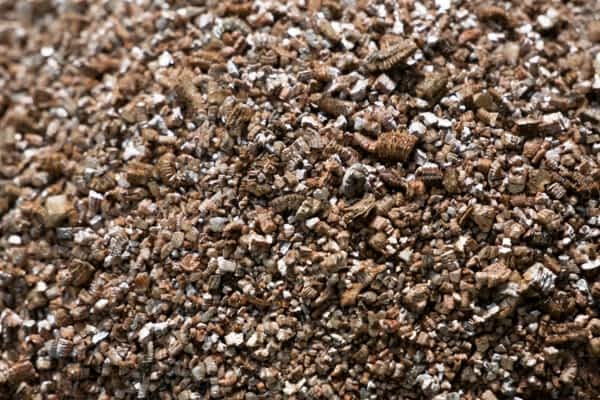
Current commercially available vermiculite is certified asbestos-free. Historical concerns about asbestos in vermiculite were linked specifically to one single mine – Libby, Montana, USA – which ceased operations in 1990. The contamination was site-specific and resulted from a naturally occurring asbestos deposit at that location.
All vermiculite we source comes with independent laboratory certification confirming zero asbestos content, tested to EPA and international standards. Safety Data Sheets (SDS) and Certificates of Analysis (COA) are available for every batch.
Bulk Packaging Options for bulk vermiculite supply
We arrange packaging to match your handling requirements and downstream processes.
Retail Bags: 10L, 25L, and 50L bags, palletised and stretch-wrapped. Ready for direct warehouse intake, distribution, or retail resale. Custom branding and white-label options available on volume orders.
Jumbo Bags (FIBC): 500kg to 1,000kg heavy-duty moisture-resistant woven bags. Suitable for industrial receiving docks and bulk unloading operations.
Storage: Keep in a dry, well-ventilated area. Protect from prolonged moisture exposure. Avoid contact with strong acids or alkalis.
Lead Times: Standard production and dispatch is 7-15 days from order confirmation, subject to volume and port scheduling.
Shipping: FCL and LCL sea freight from major Chinese export ports (Shanghai, Ningbo, Guangzhou). Air freight available for urgent orders. Full logistics documentation – MSDS, TDS, COA, Certificate of Origin – prepared and provided with every shipment.
frequently asked questions
Vermiculite has a pH range of 6.0-9.0 and a naturally mildly alkaline tendency. In most growing substrates at normal application rates, its effect on pH is minor. However, in sensitive systems such as recirculating hydroponics with tight pH targets, we recommend testing your specific blend before full deployment.
Yes, though it requires more careful sterilization than perlite between cycles because its higher moisture retention creates conditions where pathogens can persist if cleaning is incomplete. Standard practice is washing and sterilising with dilute hydrogen peroxide. Its physical structure does not degrade with repeated use.
Perlite drains freely and prioritizes aeration. Vermiculite retains moisture and nutrients. In most commercial hydroponic operations, the two are blended in ratios typically between 50:50 and 70:30 (perlite: vermiculite) depending on the crop’s water requirements. We supply both materials – contact us if you need a combined order.
We work with buyers placing full container load (FCL) orders — 20-foot or 40-foot High Cube. For buyers with lower initial volume, LCL (shared container) options may be available. Contact us with your target volume and we will advise on the most practical arrangement.
The grades differ in particle size and therefore in bulk density, water holding capacity, and aeration performance. The 1-3mm grade is finer, denser, and holds more moisture per unit volume – ideal for seed germination and propagation. The 3-6mm grade is coarser, lighter, and provides more aeration – better suited to rooting media, hydroponics, and construction applications. The 2-4mm grade performs between the two and is the most versatile for general horticulture.
Yes. Vermiculite is a naturally occurring mineral, non-toxic, and chemically inert. It is free from heavy metals, synthetic additives, and biological contaminants. It is accepted in certified organic growing systems. Our supplied material is asbestos-free with independent laboratory certification.

