
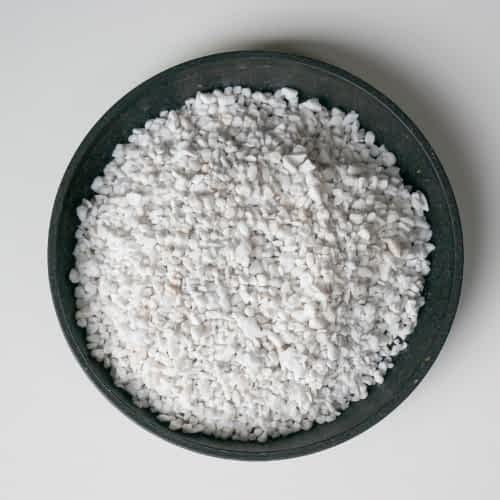
What Is Expanded Perlite?
Perlite is a naturally occurring volcanic glass formed when obsidian – a type of volcanic rock – absorbs water over thousands of years. In its raw ore state, it looks like ordinary grey rock. The transformation happens when it is rapidly heated to temperatures between 850°C and 900°C inside an expansion furnace.
At that temperature, the water trapped inside the structure vaporizes almost instantly. The resulting steam pressure causes the material to expand to 7 to 16 times its original volume, forming brilliant white, ultra-lightweight particles filled with tiny, sealed air pockets.
The end result is a material that is simultaneously lightweight, chemically inert, non-combustible, and highly porous. It does not rot, compress under load, or chemically react with growing media, fertilizers, or construction materials. These properties make expanded perlite one of the most widely used mineral materials across agriculture, construction, and industrial processing worldwide.
Sourcing Perlite at Scale – The Challenges Buyers Face
For individual gardeners, a small retail bag of perlite is an easy purchase. For commercial greenhouse operators, building contractors, or distribution businesses, sourcing perlite in container quantities is a more complex challenge.
Particle size consistency matters enormously. A batch of 4-8mm perlite with 20% undersized fines behaves completely differently in a hydroponic drain-to-waste system than material that is properly graded. Dust content affects everything from container airflow to worker safety. And factory-to-factory variation in bulk density can disrupt formulation ratios in construction mixes and growing substrates.
SUBSTRAVA manages this complexity for B2B buyers. We maintain verified relationships with expanded perlite manufacturers, independently check batches against specification before shipment, and coordinate container loading and global logistics from source to your port.
Why Businesses Choose SUBSTRAVA for bulk expanded perlite supplier
Perlite Sizes We Supply
We source expanded perlite in four commercial particle size grades. Each grade is suited to different end applications, and our multi-factory network allows us to fulfil volume orders across all four grades simultaneously.
| Size Grade | Grade Name | Primary Applications |
|---|---|---|
| 1–3 mm | Fine | Seed germination and propagation trays, potting mix blending, lightweight plaster additives, fine-grade filtration media |
| 2–4 mm | Medium-Fine | General horticulture, succulent and cacti substrates, nursery growing media, soil amendment for raised beds and containers |
| 3–6 mm | Medium-Coarse | Commercial hydroponics and aquaponics, greenhouse substrate blending, lightweight concrete and insulating screed mixes |
| 4–8 mm | Coarse | Drain-to-waste and recirculating hydroponic systems, green roof drainage layers, cavity wall insulation fill, construction aggregate |
Note: Custom particle size distribution (PSD) reports are available for any grade on request
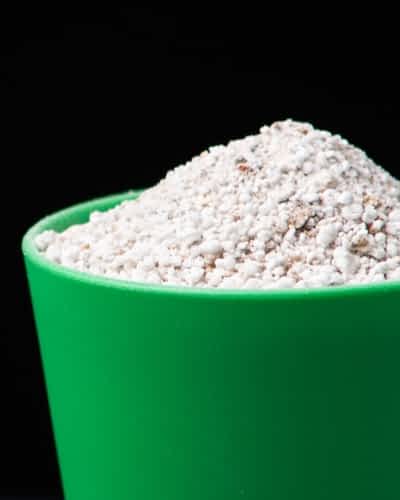

Bulk Expanded Perlite Supply for Commercial Horticulture, Construction, and Industrial Filtration
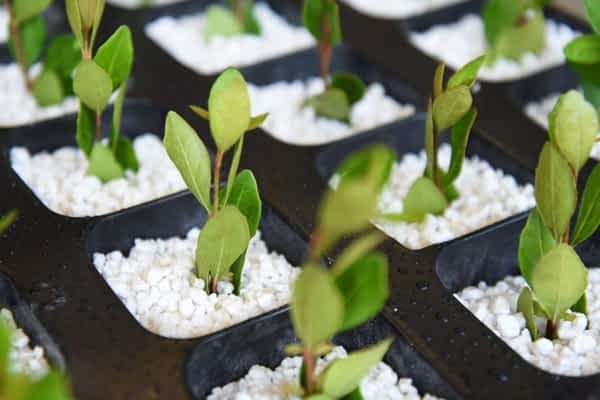
Commercial Horticulture, Hydroponics, and Greenhouse Growing
Perlite is one of the most widely used growing media amendments in commercial agriculture. Its porous structure improves oxygen availability at the root zone and prevents soil compaction over time. At the same time, the internal air pockets hold moisture long enough to support plant uptake between irrigation cycles.
In hydroponic systems, coarser grades (3–6mm and 4–8mm) are preferred. The larger particle size maintains channel and container airflow, prevents root entanglement, and allows free drainage in recirculating systems. In propagation and seedling trays, fine-grade 1–3mm perlite is mixed with coco coir or peat to provide a light, aerated starting medium.
Because perlite is fully sterile and pH neutral, it introduces no pathogens, or competing chemistry into the growing environment.
Construction – Insulation, Concrete, and Plastering
Perlite’s combination of very low bulk density and zero flammability makes it a valued material in several construction applications.
As a loose-fill insulation in cavity walls and concrete masonry unit (CMU) block cores, it provides significant thermal performance. Tests show that an 8-inch CMU block wall rated for 2 hours of fire resistance improves to a 4-hour rating when the block cells are filled with perlite – without adding significant structural weight.
In lightweight insulating concrete, perlite aggregate reduces the weight of the mix while maintaining workability. Coarse grades (3–6mm and 4–8mm) are used in insulating screed layers beneath finished floors and in roof deck systems.
In plaster and render mixes, fine-grade perlite improves workability, reduces total mix weight, and improves thermal performance of finished walls.

Industrial Water and Liquid Filtration
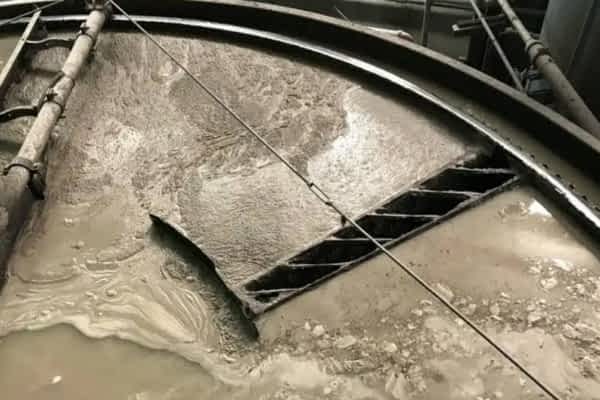
Perlite is widely used as a filtration aid in industrial liquid processing. The combination of its porous internal structure and chemically inert surface makes it effective as a pre-coat and body-feed medium in pressure filtration systems.
Applications include municipal and industrial wastewater treatment, food and beverage processing filtration (beer, wine, fruit juice, edible oils), pharmaceutical liquid clarification, and chemical process filtration. Because perlite contains no heavy metals and is non-toxic, it meets safety requirements for food-grade and pharmaceutical processing environments.
Bulk Packaging Options
We arrange packaging to match your handling processes and downstream requirements.
Retail Bags: 10L, 25L, and 50L bags, palletised and stretch-wrapped for direct warehouse intake or distribution resale.
Jumbo Bags (FIBC): 500kg to 1,000kg moisture-resistant woven polypropylene bags for bulk industrial unloading. Suitable for outdoor short-term storage.
White-Label and Custom Branding: Available on sufficient volume orders. Contact our team with your packaging specification.
Lead Times: Standard production and dispatch lead time is 7–15 days from order confirmation, subject to order volume and port scheduling.
Shipping: Full container load (FCL) and less-than-container-load (LCL) sea freight from major export ports. Air freight available for urgent consignments. Full logistics documentation and customs preparation included.
frequently asked questions
Yes. The perlite we source is non-toxic, contains no heavy metals, and is chemically inert. It is suitable for food and beverage filtration applications and complies with the relevant safety standards for food-contact materials.
The 3–6mm and 4–8mm grades are most commonly used in commercial drain-to-waste and recirculating hydroponic systems. They provide adequate drainage and root oxygenation without compacting. For propagation and seedling stages, 1–3mm mixed with coco coir is the standard approach.
Yes. Perlite can be washed, sterilized (typically with a dilute hydrogen peroxide solution), and reused for multiple growing cycles. Its physical structure does not degrade with repeated use.
We work with buyers ordering full container loads (FCL) – 20-foot or 40-foot High Cube. For buyers with lower initial volume requirements, LCL (shared container) options may be available. Contact us with your volume and we will advise on the best arrangement.
The core material is the same – expanded volcanic glass. The distinction is in particle sizing and dust levels. Horticultural grades are sized for root aeration and typically have lower dust content to avoid blocking irrigation systems. Construction grades are sized for aggregate performance in concrete and insulation mixes. We supply both grades across our four size options.
No. Perlite has a neutral pH of 6.5–7.5 and an extremely low electrical conductivity. It does not contribute minerals or ions to your nutrient solution and will not affect system chemistry.

